

The 2025 government shutdown is causing major air travel chaos. The FAA announced nationwide flight cancellations, cutting capacity by 10% at 40 major airports. Learn which airports are affected, why this is happening, and what passengers can do.
Government Shutdown Flight Cancellations 2025: How the FAA Cuts Are Impacting U.S. Air Travel

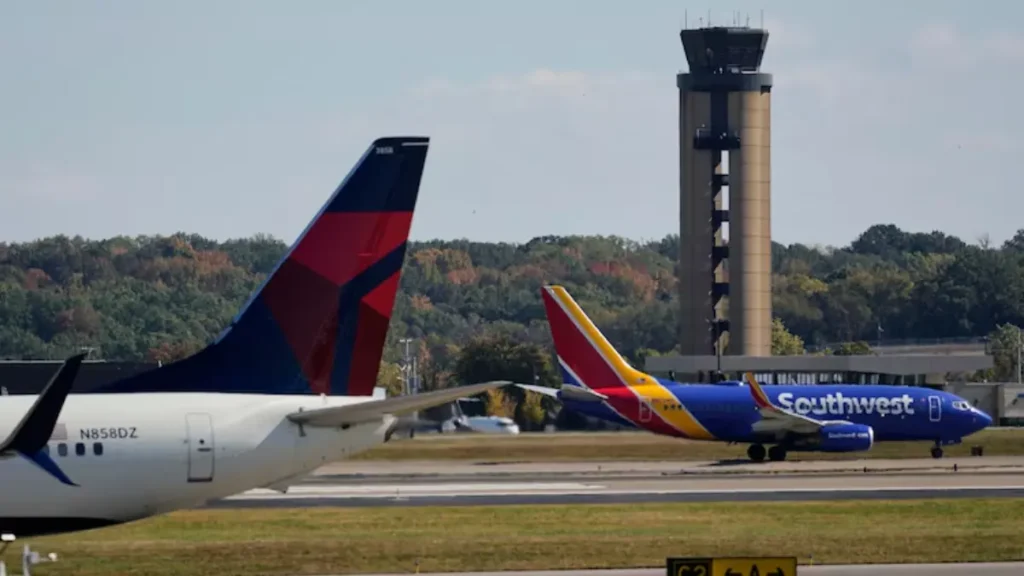
The government shutdown flight cancellations have triggered massive disruptions across the U.S. aviation system, leaving thousands of passengers stranded or facing delays. The Federal Aviation Administration (FAA) announced it will reduce flight capacity by up to 10% at 40 major airports, citing staffing shortages and safety concerns as the ongoing shutdown enters its 37th day.
This unprecedented move comes amid warnings from federal officials that prolonged funding gaps could force parts of U.S. airspace to close entirely. As airlines adjust their schedules and passengers scramble for information, the ripple effects are being felt nationwide.
✈️ Overview of the FAA’s Flight Reductions
According to FAA Administrator Bryan Bedford and Transportation Secretary Sean Duffy, the cuts are a proactive measure to “reduce the risk profile in the national airspace” as staffing pressures mount during the government shutdown.
The government shutdown flight cancellations will begin on Friday, November 7, 2025, starting at a 4% reduction and gradually reaching 10% by next week. These measures affect domestic flights between 6 a.m. and 10 p.m., though international routes remain exempt.
🧾 Key Details of the FAA Reduction Plan
| Category | Details |
|---|---|
| Initiative | FAA flight capacity reduction |
| Reason | Government shutdown and staffing shortage |
| Effective Date | November 7, 2025 |
| Initial Cut | 4% on Friday |
| Full Reduction | 10% across 40 major airports |
| Flights Affected | Domestic (6 a.m.–10 p.m.) |
| International Flights | Not affected |
| Airlines Impacted | All U.S. domestic carriers proportionally |
| FAA Officials | Bryan Bedford & Sean Duffy |
The FAA confirmed that safety will remain its top priority, emphasizing that the move is designed to prevent potential system overloads caused by limited staffing levels, especially among air traffic controllers.
🏙️ List of Airports Affected by FAA Flight Cuts
The government shutdown flight cancellations will primarily affect large hubs and high-traffic airports across the country. Below is the full list of airports expected to experience reduced flight operations:
| Region | Airports Affected |
|---|---|
| East Coast | Boston Logan, JFK, LaGuardia, Newark Liberty, Philadelphia, Baltimore/Washington International, Reagan National |
| Midwest | Chicago O’Hare, Chicago Midway, Detroit Metro, Minneapolis-St. Paul, Cincinnati/Northern Kentucky, Indianapolis |
| South | Atlanta Hartsfield-Jackson, Charlotte Douglas, Miami International, Dallas/Fort Worth, Houston Intercontinental, Tampa, Orlando, Memphis |
| West Coast | Los Angeles International, San Francisco International, Seattle-Tacoma, Portland, Oakland, San Diego |
| Mountain/Other Regions | Denver International, Phoenix Sky Harbor, Salt Lake City, Las Vegas McCarran, Honolulu, Anchorage |
The FAA stated that reductions will be proportionate across airlines operating at these airports. Smaller regional routes and off-peak flights are likely to be affected first.
🧩 Why the Government Shutdown Is Causing Flight Cancellations
The government shutdown flight cancellations stem from multiple compounding issues — primarily staffing shortages and halted pay for federal employees.
- Air Traffic Controller Shortages
Thousands of air traffic controllers are working without pay or have taken leave, leading to reduced availability at key control centers. - Delayed Safety Inspections
FAA safety inspectors and maintenance personnel are not fully staffed, slowing critical operations that ensure safe flights. - Operational Strain
Airlines are struggling to reschedule flights due to limited FAA capacity, forcing them to cancel or consolidate routes. - Preventative Action
FAA leadership emphasizes that these reductions are preventive, not reactive, designed to maintain safety standards before major issues arise.
🧭 Airlines’ Response to the Shutdown Crisis
Airlines such as United, Delta, American, and Southwest are coordinating with the FAA to manage the flight reductions.
United Airlines released a statement ensuring passengers that:
“Customers looking for a refund on any canceled flight can request one, even for non-refundable or basic economy fares.”
The airline added that updates will be sent via app notifications, emails, and text alerts.
Meanwhile, Airlines for America, the industry trade group, stated that it is “working closely with federal officials to minimize passenger inconvenience.”
📉 Economic and Travel Impact
The government shutdown flight cancellations are expected to impact both domestic travel and the broader economy.
- Estimated Flights Lost Per Day: 2,500–3,000
- Estimated Daily Passenger Impact: 400,000+
- Potential Economic Loss: $300 million per day (according to travel analysts)
💼 Industries Affected
| Sector | Impact |
|---|---|
| Tourism | Decline in hotel bookings and vacation travel |
| Airlines | Reduced revenue, rescheduling costs |
| Cargo/Logistics | Delays in domestic shipments |
| Business Travel | Meeting cancellations, higher costs |
🕰️ Timeline of the FAA Decision
| Date | Event |
|---|---|
| October 1, 2025 | U.S. government shutdown begins |
| October 25, 2025 | DOT warns of potential airspace closures |
| November 5, 2025 | FAA announces upcoming capacity cuts |
| November 7, 2025 | 4% reduction starts |
| November 10, 2025 | Full 10% reduction in effect |
This marks the first time in FAA history that such a large-scale flight reduction has been implemented during a government shutdown.
🗣️ Statements from Federal Officials
FAA Administrator Bryan Bedford emphasized:
“We’re not going to wait for a safety problem to manifest itself. Early indicators tell us we can take action today to prevent deterioration.”
Transportation Secretary Sean Duffy added:
“We will delay, we will cancel — whatever is necessary to ensure passenger safety. This is about risk management in our national airspace.”
Their coordinated message underlines that the government shutdown flight cancellations are not an operational failure but a safety-driven precaution.
🧳 What Travelers Should Do If Their Flight Is Canceled
If your flight is affected by the government shutdown flight cancellations, here’s how to respond:
- Check Airline Apps Frequently – Real-time notifications about cancellations or rebookings are available.
- Request Refunds Immediately – Even non-refundable fares are being honored due to the shutdown.
- Consider Alternate Airports – Some smaller airports not on the FAA’s reduction list may still have flights available.
- Monitor FAA Updates – The FAA will release new directives daily as conditions evolve.
🧾 Traveler Tip Table
| Action | Recommendation |
|---|---|
| Flight Canceled | Request refund or rebook through the app |
| Travel Insurance | Check if your policy covers shutdown-related delays |
| Connecting Flights | Allow extra layover time to avoid missed connections |
| Customer Service | Contact airlines early morning for shorter wait times |
💬 Public Reaction and Social Media Buzz
The announcement has sparked nationwide discussion under hashtags like #FlightCancellations2025 and #FAAShutdown. Many travelers expressed frustration over last-minute cancellations, while others praised the FAA for prioritizing safety.
Social media platforms, especially X (formerly Twitter) and TikTok, are flooded with videos of long lines, canceled itineraries, and travelers sharing their experiences navigating the chaos.
❓ FAQs About Government Shutdown Flight Cancellations
1. Why is the FAA reducing flights?
The FAA is cutting flights to maintain safety standards amid staffing shortages caused by the prolonged government shutdown.
2. How long will the flight cuts last?
Officials have not given an end date, but reductions will likely continue until federal funding is restored.
3. Are international flights affected?
No, only domestic flights between 6 a.m. and 10 p.m. are included in the capacity cuts.
4. Can passengers get refunds?
Yes, all major airlines are offering refunds, even for non-refundable tickets, due to the shutdown.
5. Which airports are affected most?
High-traffic airports like Atlanta, Chicago O’Hare, LAX, JFK, and Dallas/Fort Worth will experience the largest reductions.
🧭 Conclusion: Safety Over Speed Amid the Shutdown
The government shutdown flight cancellations highlight the fragile balance between national safety and operational efficiency. While travelers face inconvenience and economic costs rise, FAA officials insist the measures are necessary to prevent larger crises in U.S. airspace.
Until federal funding resumes, passengers should expect ongoing disruptions and remain flexible with travel plans. For now, the FAA’s decision underscores one clear message: safety will always come before schedule.